

Minako Yoshida : Her songs are timeless and never grow old.
Minako Yoshida’s 8th studio album, Light’n Up was released in 1982. This album was produced by Minako Yoshida herself, wrote and arranged this song herself too. I believe it to be not only one of her best-known works, but also an outstanding J-Pop masterpiece passed down to the younger generation.
My impression of Light’n Up has not changed since I first heard it in the ’80s. I often feel nostalgic when I listen to J-Pop from the ’70s and ’80s, but many of her songs are timeless and never seem to grow old.
Light’n Up recorded in Tokyo and New York
Since her 4th studio album, Twiligt Zone (released in 1977), Yoshida has continued to experiment with horn sections and incorporate soul and funk elements. I believe that the album Light’n Up represents the peak of Yoshida’s efforts to create her own unique musical world that does not belong to any particular genre. (For the convenience of readers, I have labeled this post as “City Pop.”)
She produced Light’n Up, wrote the lyrics, and handled the composition and arrangement for nearly every track herself. In short, the album is a distillation of everything she wanted to express at that moment in time.
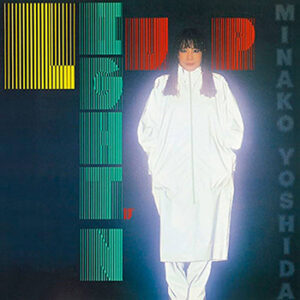
Minako Yoshida’s creative ambition was evident in the decision to record the band’s performance in Tokyo while capturing the string and horn sections in New York. Notably, the horn section features the legendary Brecker Brothers, renowned for their collaborations with David Sanborn.
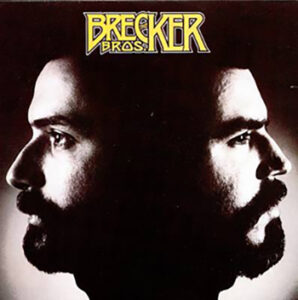
In fact, Sanborn had already left the Brecker Brothers by the time Light’n Up was recorded in 1982. Nevertheless, Yoshida brought him back into the band, and they recorded Light’n Up with the original members.
This allows us to fully enjoy the superb solos by Michael Brecker and David Sanborn, which were inspired by Yoshida’s vocals.
Reference : Biography from Yoshida Minako official web site BELLS
Hoho Ni Yoru No Hi : Minako Yoshida sings a heart in love and a twilight city scene
‘Hoho Ni Yoru No Hi’ expresses a woman’s passionate longing for her lover, mirrored in the shimmering lights and fleeting reflections of a twilight cityscape. The title poetically evokes the glow of city lights illuminating her cheeks.
The lyrics of this song are beautiful. As each word is sung, an image of the cityscape where the lovestruck girl is standing comes to mind.
The woman in this song strikes me as emotionally reserved—unable to utter ‘I love you’ directly to the one she cherishes. Yet she believes that love can still blossom, even without words, so long as the two are given quiet chances to share their feelings, little by little.
The song itself isn’t bright or lively, and no intention to make a persuasive statement is evident. Still, the song will inspire listeners who are in the early stages of falling in love. I am one of the many listeners whose love has been inspired by this song.
The graceful melody is, of course, one of the song’s undeniable highlights. And while it hardly needs mentioning, David Sanborn’s mid-song solo is simply exquisite—it feels like an eruption of the restrained heroine’s deepest passions, spilling forth in a moment of pure emotional release.
This song continues to captivate listeners across generations. The performance by the young Japanese band OPUS is especially impressive—brimming with admiration for Yoshida. In the video, Sanborn’s iconic solo is faithfully reinterpreted on keyboard, and when you watch the scene closely, you’ll notice it’s crafted around the C pentatonic scale—a simple, resonant five-note foundation of C, D, E, G, and A.
Light’n Up : The city lights shine and begin to move
The title track of the album, “Light’n Up,” is a song about the lights of the city, as is “Hoho Ni Yoru No Hi.” However, the song seems to capture the essence of the city’s lights, including the lights from building windows, neon signs, car headlights, and other moving lights.
Along with the rhythmic and dynamic horn section, it marks the beginning of the album, building anticipation and excitement for what’s to come.
Toki No Mukou : Minako Yoshida’s songs inspire me to think.
Judging by the lyrics, I believe the title alludes to ‘what lies beyond time.’ ‘Time’—or toki—is a recurring motif in Yoshida’s work, notably appearing in songs like “Toki Yo” (1978) and “Toki Wo Mitsumete” (1990).
“Toki No Mukou” evokes the bittersweet memories of a joyful romance long past, while capturing the present-day emotions and regrets that come with truly understanding love. Its nostalgic atmosphere—woven into both the lyrics and melody—stirs deep recollections and tender feelings in the listener.
It may just be my own experience, but whenever Yoshida sings something with “time” as a motif, I start thinking philosophically about time. For example…
In Japanese, the word ‘time’ encompasses a rich range of meanings. It can refer to expansive periods, such as a season or an era, or pinpoint a fleeting moment. If we were to give time a shape, it might appear linear, circular, or endlessly repeating—like a fractal. The hourglass, naturally, is one of its iconic images.
Yet time is something we perceive and recall. It exists because we experience it. So if humanity were to vanish, would time still hold meaning?
・・・ and so on.
I do not know what method or process Minako Yoshida uses to write lyrics. Do they emerge from deep contemplation? Or do they result from a momentary flash of inspiration? In any case, to me, her lyrics go beyond being just part of a song; they are a kind of “magic” that evokes various sensations and contemplations.
For Apple Music User